Is Your Anxiety Coming From Your Inner Child? How EFT Might Help
- Georgia Parker
- Feb 17
- 3 min read

Updated: May 19

Sometimes anxiety isn’t about what’s happening right now. It’s about what your nervous system learned a long time ago. If you’ve ever felt like your reaction to something was too much, too emotional, too intense, too overwhelming, it may not be about weakness or poor coping skills. It may be a younger part of you trying to stay safe.
What Is Inner Child Work?
Inner child work is the process of gently connecting with younger parts of yourself that formed beliefs about safety, love, and worth during childhood. Your “inner child” isn’t literal, it’s a psychological and emotional part of you that learned:
How to avoid rejection
How to prevent conflict
How to gain approval
What feels dangerous
These patterns often form before we have language or logic to understand them. And they don’t simply disappear because we become adults.
Why Childhood Emotional Wounds Can Show Up as Anxiety
When something in the present resembles something from the past, your nervous system reacts automatically. For example:
A delayed reply might trigger fear of abandonment
Constructive feedback might trigger shame
Conflict might trigger panic
Someone pulling away emotionally might trigger deep insecurity
Logically, you may know you’re safe. But your body responds as if you’re not. This is because anxiety is often a nervous system response, not a rational thinking problem. Your body remembers what your mind has moved on from.
The Anxiety Trigger
Many people focus on the current trigger:
“Why did that text upset me?”
“Why do I panic before meetings?”
“Why do I spiral when someone is distant?”
But often the intensity isn’t about the present moment It’s about a younger part of you that once felt:
Unheard
Criticised
Unpredictably loved
Responsible for keeping peace
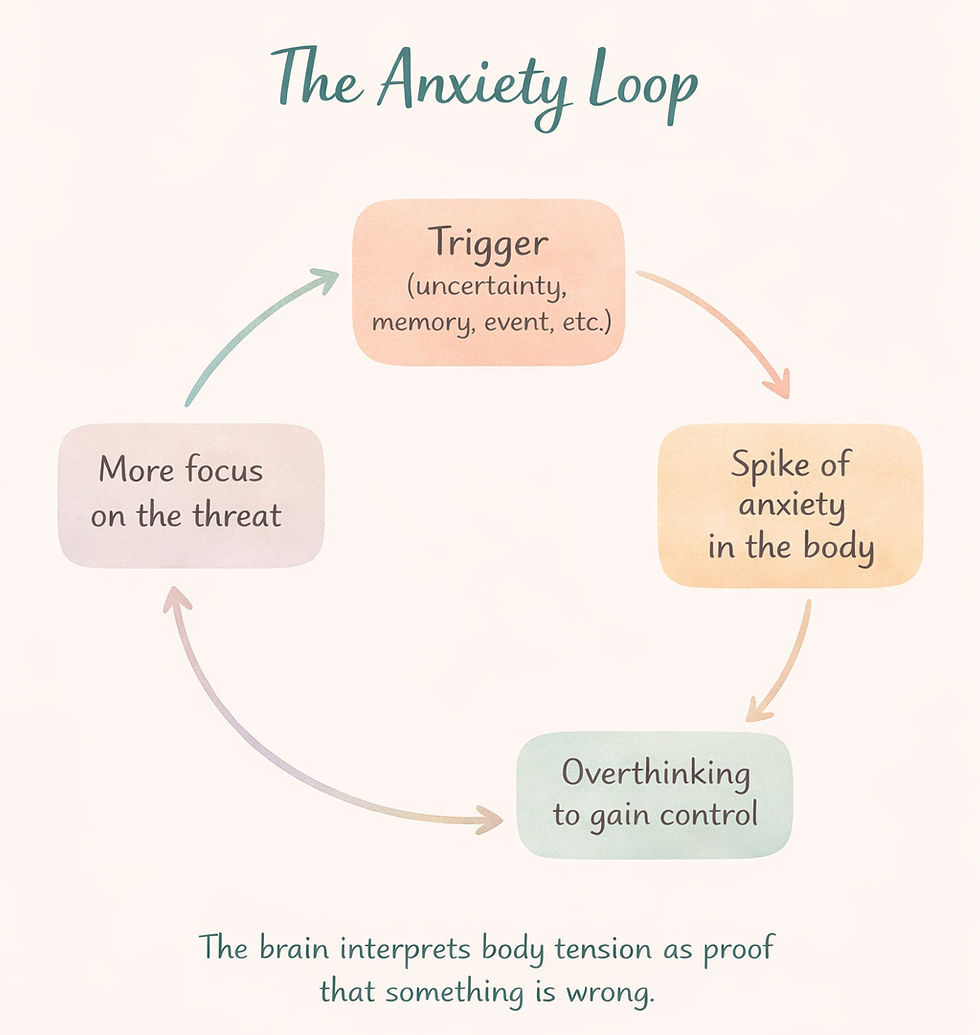
When those old emotional memories are activated, the nervous system goes into protection mode. That’s the anxiety loop.
How EFT Supports Inner Child Healing
EFT (Emotional Freedom Technique), often called tapping, works directly with the nervous system.
Rather than analysing the past intellectually, EFT allows you to:
Acknowledge the younger part
Stay regulated while accessing emotion
Reduce the emotional charge
Update old beliefs
This is important because revisiting childhood wounds without regulation can feel overwhelming.
Tapping helps the body feel safe while the memory or emotion is present. For example, you might tap while saying:
“Even though a part of me feels small and scared, I’m here now.”
“Even though this reminds me of being criticised, I’m safe in this moment.”
Over time, the nervous system begins to differentiate between past and present. The reaction softens. The trigger loses intensity. The belief updates.
Inner Child Work Isn’t About Blame
It’s not about criticising parents or reliving everything that happened. It’s about recognising that some of your anxiety may be protective. Protective patterns once kept you safe, but now they may be keeping you stuck. Healing happens when you can meet those parts with compassion instead of frustration.
If you struggle with overthinking, people-pleasing, perfectionism, or fear of conflict, it doesn’t mean you’re flawed. It may mean a younger version of you learned that being hyper-aware was necessary. Inner child work, supported by nervous system regulation through EFT, allows you to gently shift those patterns.
Not by forcing change, but by creating safety.
You Don’t Have to Do It Alone
Working with anxiety triggers at their root can feel vulnerable. Having support allows the process to feel contained, steady, and paced.
If this resonates with you, I offer a free 20-minute consultation where we can explore whether EFT and inner child work feel like the right fit. Healing isn’t about fixing yourself, it’s about helping your nervous system realise you’re safe now.

Comments